
About Faculty of Natural Science & Sustainability
The Faculty of Natural and Sustainability Science (FNSS) is a key player in realizing UCSF’s Green Concept and Philosophy. FNSS currently offers an integrated tertiary education pathway, starting with a Foundation in Science Programme which also serves as a feeder to a degree programme. In the pipeline are 2 diploma and a postgraduate programme by research. Being located in Sabah means that lecturers and students of FNSS have ready access to one of the world’s richest natural diversity to conduct studies and research. This is further facilitated by the fact that UCSF’s parent company, Sabah Foundation, is recognized as an active steward for some of the most important tropical rainforest conservation areas in the world such as Danum Valley, Maliau Basin and Imbak Canyon.
Research and Innovation are very important to FNSS because our curricula are based on the education concept of connected curriculum whereby teaching and learning are closely related to research. Both our experiential learning and research programmes are holistic and relevant to the needs of Sabah and Malaysia, adheres to the university’s Green Concept and Philosophy as well as contributing to the achievement of the UN’s Sustainable Development Goals.
Our mission is to produce well rounded human talents with 21st century skills who are adept at working in a broad range of fields and entrepreneurial in nature. We also subscribe to the widely accepted concept of STREAM in our programmes, whereby our graduates have the technical skills in Science and Technology, are Religio-Ethical, appreciate the Arts, and have Management skills. In addition, our graduates are also skilled in digital technology because we leverage on digital technology in our teaching and research.
Name : Ibrahem Ghani Wasti
Position : Dean
Email : ibrahemghaniwasti@ucsf.edu.my
Telephone No (Office) : 088-511 169
EXPERT IN MYCOLOGY, BIODIVERSITY AND BIOSYSTEMATICS
Ibrahem Wasti
Ibrahem Wasti is the Dean of the Faculty of Natural Science and Sustainability (FNSS), University College Sabah Foundation (UCSF). His field of research is in Biodiversity and Biosystematics, mainly focusing on Mycology and Microbiology. Before being appointed the Dean, he has been a lecturer with the faculty since 2015. He received his Master of Science from the Institute for Tropical Biology and Conservation (ITBC), Universiti Malaysia Sabah (UMS). His postgraduate research was titled, Fungal Diversity in Speleothem Surfaces, Bat Guano, Dead Arthropods, and Cavern Water of Limestone Caves in Sabah, Malaysia. He received his Bachelor of Science (Human Biology) from the College of Natural Science and Bachelor of Arts (English) from the Department of English, both in Michigan State University. Courses he coordinates and teaches include Molecular Ecology and Conservation Genetics, Molecular and Cell Biology, Principles of Sustainability, Green Concept and Philosophy, and Diversity of Life and Evolution.
Name : Nasimah Asmuran
Position : Lecturer, Head of Programme (BSS)
Email : nasimahasmuran@ucsf.edu.my
Telephone No (Office) : 088-511 166
EXPERT IN WASTE MANAGEMENT (TREATMENT OF INDUSTRIAL EFFLUENT)
Nasimah Asmuran
Nasimah Asmuran is a lecturer and the Head of Programme for Bachelor of Science (Hons) (Sustainable Resource Management and Conservation) (BSS) at the faculty of Natural Science and Sustainability (FNSS), University College Sabah Foundation (UCSF) since 2016. She obtained her Master Degree in Chemical Engineering from Universiti Malaysia Sabah. Her postgraduate research mainly focuses on the treatment of palm oil mill effluent using coagulation/flocculation and filtration as well as modelling and optimization by response surface methodology. She has published 2 journals in elsevier and 1 journal in Asean Journal of Chemical Engineering. Courses she has coordinated or taught include chemistry, environmental geology and sustainable energy.
Name : Dk Nadhirah Ak Jalaluddin
Position : Lecturer
Email : dknadhirah@ucsf.edu.my
Telephone No (Office) : 088-511 166
EXPERT IN HEALTH ENVIRONMENT AND INFECTIOUS DISEASE
Dk Nadhirah Ak Jalaluddin
Dk Nadhirah Ak Jalaluddin is a lecturer at Faculty of natural science and sustainability, University College Sabah Foundation. She obtained her degree from Universiti Kuala Lumpur (Unik) in Clinical Laboratory Science. Her undergraduate research focusing on toxicology which involves using Cocos nucifera water as a treatment for lead-induced toxicity of Sprague Dawley rats. She received her master degree in health science (Biomedical) from Universiti Kebangsaan Malaysia (UKM) specializes in environmental health, infectious disease, microbiology and public health. She currently the coordinator of several courses in the faculty, including Ecology of health and science, Molecular and cell biology, Human ecology, Community Based natural management and Geography of sustainable development.
Name : Nur Ain Awatif Bt Mohd Kanapiah
Position : Lecturer
Email : nurainawatif@ucsf.edu.my
Telephone No (Office) : 088-511 166
EXPERT IN CHIROPTEROLOGY, BIODIVERSITY AND BIOSYSTEMATICS
Nur Ain Awatif Bt Mohd Kanapiah
Nur Ain Awatif Bt Mohd Kanapiah is currently a lecturer in the Faculty of Natural Science and Sustainability (FNSS), University College Sabah Foundation (UCSF). She graduated with Conservation Biology from University Malaysia Sabah in 2018. Currently, she is pursuing her Master’s degree in Biodiversity and Biosystematics, specialising in morphological and molecular study of Bats in Sabah, at the Institute of Tropical Biology and Conservation, UMS. She has performed her sampling all around Sabah, in places such as Gomantong Cave, Maliau Basin, Danum Valley, Tawau Hills Park, Mount Alab, Madai Cave and Crocker Range Park. She aims to educate the world that bats are not animals that you need to be scared about but important and cute creatures to discover and protect. Currently at UCSF, she has been appointed to teach several subjects such as Diversity of Life, Introduction to Oceanography and Genetics.
Name : Rumansah bin Adam
Position : Laboratory Coordinator and Technician
Email : rumansahadam@ucsf.edu.my
Telephone No (Office) : 088-511 168
Rumansah bin Adam
Rumansah bin Adam graduated with Sijil Kemahiran Malaysia (SKM) Tahap Dua and Tahap Tiga from Kolej Teknikal Yayasan Sabah (KYS), Kota Kinabalu in 2008 and 2009 respectively. He then further his studies and obtained his Diploma in Information Technology (Information System) in the year 2010. He has been working with University College Sabah Foundation (UCSF) since September 2014 and is currently appointed as Laboratory Coordinator and Technician. He previously served in Kolej Teknikal Yayasan Sabah (KYS) from October 2010 until August 2014 and holds the position of Hostel Supervisor.
February & September
January, May & September
Introduction to Research and Interdisciplinary Field Course (IRIFc) (SSS3176)
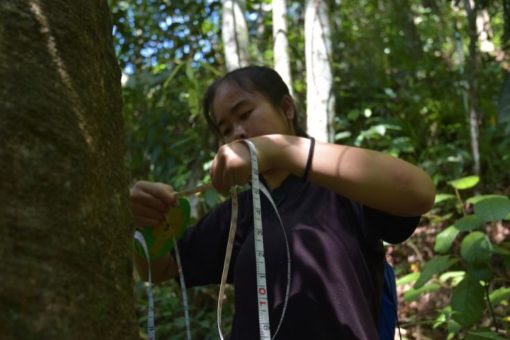 Field techniques are mostly used in gathering information and data frequently applied in research and survey.
Essentially, the IRIFc is a field-intensive course that was developed to expose the undergraduates to interdisciplinary approaches and research technique in the field. Imparted within IRIFc is the inter-disciplinary apporach of assessing natural resources and the environment, carried out within an ecologically diversified protected areas in Sabah. The aims of this course was to provide and exclusive total-environment education while promoting holistic growth and skills among the undergraduates. Throughout this course, the undergraduates will be able to highlight current issues face by the communities and the ecosystem, provides an eco-centric view of nature and ecosystem as well as to predict potential impacts on the ecosystem. This will expose the undergraduates on the old and modern technique on doing research which will encompasses four major components including fauna, flora, environment-physical and social science aspect in research. Modern tools such as the usage of software during the course will also expose the students more on the modern-technique in research.
CODE: SSS3176
NAME: Introduction to Research and Interdisciplinary Field Course (IRIFc)
HIGHLIGHTS:
• Field techniques in fauna research
• Field techniques in flora research
• Field techniques in environment-physical research
• Field techniques in social science research
• Using modern software to answer questions in research
• Highlight currents issues, assess and predict the impact to the ecosystem
• Apply the theory in practical sessions designed to develop transferrable skills
TRANSFERRABLE SKILLS:
• Practical skills – techniques in research
• Practical – software
• Scientific writing
Natural Resource Management (SRC3163)
 This course provides an overview of the principles of interdisciplinary natural resource management and planning.
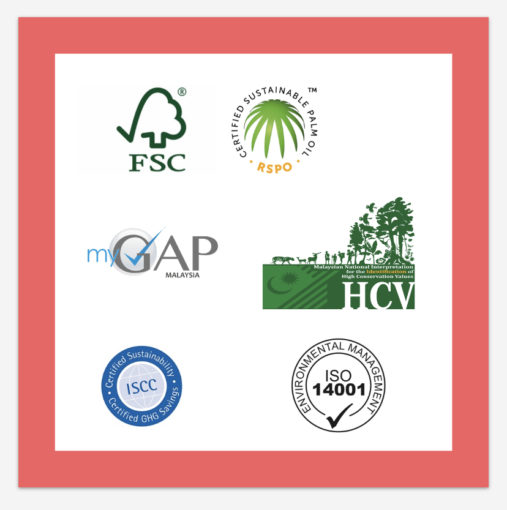
Sustainable natural resource management can be defined as a set of principles and practices that organize and trade-off the use of resources for human consumption in a manner that does not compromise the ability of the managed environment to provide other essential services. Students will learn about various sustainable management standards that are currently used in industry that manage natural resources such as FSC, PEFC, and RSPO. In addition, this course will expose students on the sustainable management being practiced in the field through fieldwork to relevant companies.
CODE: SRC3163
NAME: NATURAL RESOURCE MANAGEMENT
Ecology of Health and Disease (SRC3203)
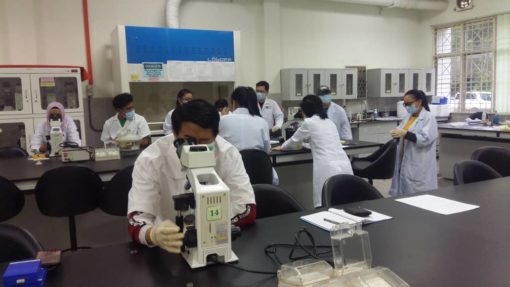 This course will focus on the ecological and evolutionary processes that drive the transmission of pathogens between hosts; the impact of disease on host populations; and what causes the emergence of an infectious disease.
The course content includes a theoretical framework, a description of field techniques, and a discussion of wildlife and human diseases including influenza (swine flu, bird flu), dengue, malaria, West Nile virus, Lyme disease, HIV, Chikungunya, tuberculosis, chytridiomycosis, Ebola, sudden oak death, and many others.
CODE: SRC3203
NAME: ECOLOGY OF HEALTH AND DISEASE
HIGHLIGHTS:
• Student will learn about infectious disease of human, animals and plant.
• Exposed the student to the vector and parasite that caused disease.
• Lab technique in identification of pathogen
• Management of infectious disease
TRANSFERABLE SKILLS:
• Communications skills
• Lab practical skills
• Scientific skills
• Problem solving skills
Molecular Ecology and Conservation Genetics (SRC4233)
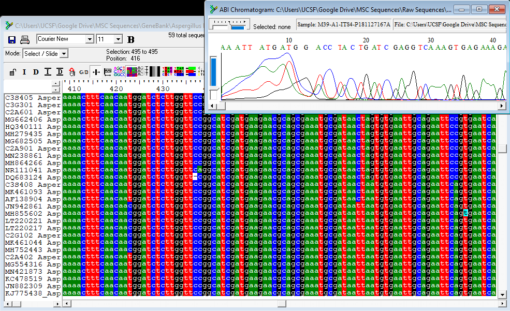 Molecular ecology and its applications are a relatively novel field that is rapidly developing with new techniques as well as theoretical approaches.
The new theories and techniques acquired allow evolutionary biologists to address questions related to address questions in a wide variety of research areas, including conservation genetics, population genetics, ecological genetics, and phylogeography. Not only will students gain experience working with tools that molecular ecology employs, but they will also marvel at the stories natural history, diversity, and phylogenetic trees can tell.
CODE: SRC4233
NAME: Molecular Ecology and Conservation Genetics
HIGHLIGHTS:
• Learn the latest molecular techniques being used to solve age-old taxonomic problems.
• Apply the theory in practical sessions designed to develop transferrable skills
• Gain a better understanding on what factors affect ecological diversity, and thus how to protect
it
TRANSFERRABLE SKILLS:
• Practical molecular and phylogenetic analytical skills
• Scientific writing and comprehension
Wildlife Ecology & Management (SRC4253)
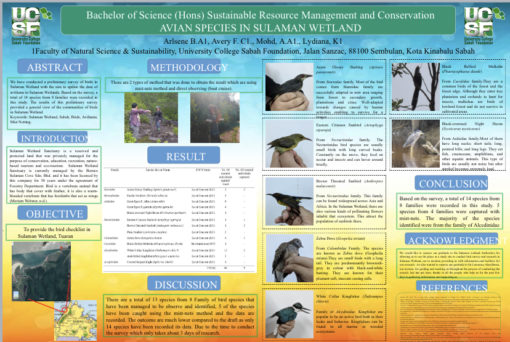 This course will expose students to the application of ecological principles and theories in wildlife conservation and management.
It focuses on helping students to understand how to utilise modern tools and techniques, as well as developing practices in perpetual application of various ecological and biological theories into wildlife management and conservation. Interesting topics such as population monitoring, developing wildlife management plan, wildlife photography, conservation educational program, managing human-wildlife conflicts and legislation related to wildlife.
CODE: SRC4253
NAME: WILDLIFE ECOLOGY AND MANAGEMENT
Environmental Law & Policy (SRC4282)
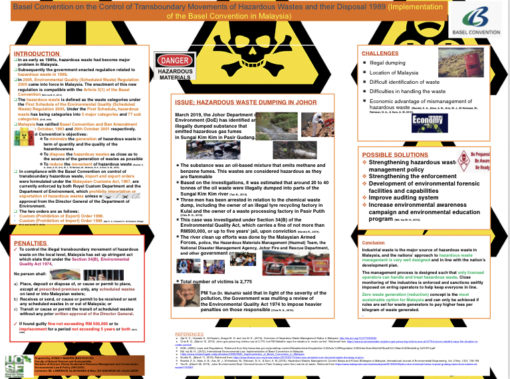 A comprehensive understanding of existing environmental laws and institutions is essential to those seeking to work with the environmental policy and sustainability.
This course provide an overview of the history, current requirements, and emerging policy issues associated with environmental laws and institutions at the Malaysian, and international levels. It also examines the role of judicial decisions in environmental policy. On the state and national levels, specifically Sabah and Malaysian laws and institutions are covered for: the public trust doctrine, environmental impact assessment, pollution control, water resources, fish and wildlife, wetlands, and climate change. On a global scale, the course reviews related environmental treaties in relation with Malaysian legislation. Students will be able to gain experience in policy making processes and interact with environmental lawyers.
CODE: SRC4282
NAME: ENVIRONMENTAL LAW AND POLICY
Environmental geology (SSS2063)
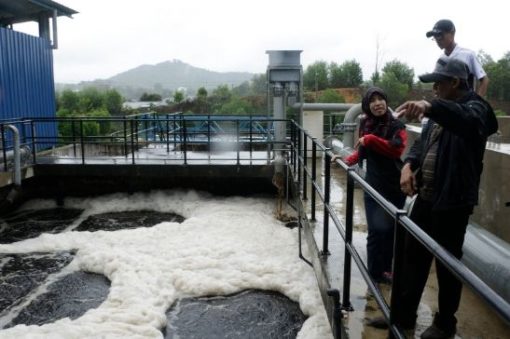 In this course, students get the knowledge and skills needed to develop their career as a sustainable manager or conservationist.
Geology is a field knowledge to start with in developing an understanding of many environmental issues. This course emphasizing the physical constraints imposed in human activities by the geological processes that have shaped and are still shaping our natural environment. Students are going to examine how geologic processes & hazards influence human activities (or vice versa), the geologic aspects of pollution and waste-disposal problems. The teaching and learning will be based on actual case histories and specific real-world examples. The case studies used involve a situation, problem or application that might be encountered in everyday life.
CODE: SSS2063
NAME: Environmental Geology
HIGHLIGHTS :
• Learning past, present and future Earth’s condition, either effects of natural disaster or from human activities.
• Learning the basic fieldwork technique and handling instrument specifically used in the physical environment studies.
• Applying the theoretical knowledge in solving the real life problems, e.g. industrial pollution, communities activities.
TRANSFERABLE SKILLS :
• Field technique skills (sampling, observing, collecting data, analyzing, etc)
Flora of Malaysia (SRC3039)
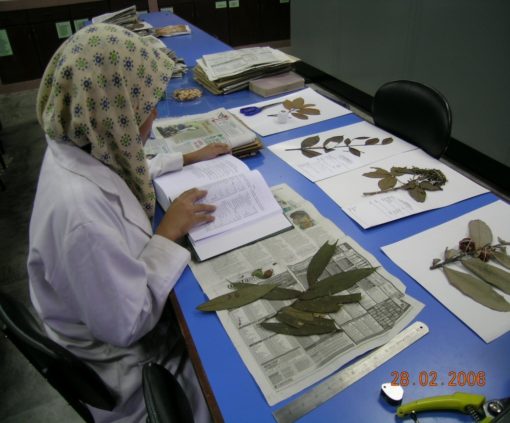 This course will introduce concepts which relevant to plant botany and Dendrology. The student will be exposed to the different floral types based on various habitats or ecosystem.
They will also be introduced to the International Code of Botanical Nomenclature (ICBN) and herbarium management system. Plant taxonomical systems will be covered so that student will understand the taxonomical concepts which applied in dendrology. Practical on how to use flora checklist and other flora and wood classification, plant habitats, key identification, botanical indicators and collection of herbarium specimens will be presented. This will be supported through practical experience in relevant reference points such as Sandakan Herbarium and also in forest reserve where the students can apply what they have learned.
CODE: SRC3039
NAME: FLORA OF MALAYSIA
HIGHLIGHTS:
• Field techniques in flora research
• Emphasizes key identification
• Lab technique in making a plant specimen/herbarium
• Apply the theory in practical sessions designed to develop transferable skills
TRANSFERABLE SKILLS:
• Field techniques skills
• Lab practical skills
• Scientific skills
Contact Us
For more information, kindly contact:
Tel : 088 – 511 111
Fax : 088 – 511 100
Email : enquiry@ucsf.edu.my